

Nike and Adidas renew World Cup rivalry
The race is on for who will sell more jerseys

One of the World Cup’s fiercest contests is unfolding far from the soccer field. Sportswear giants Nike and Adidas have once again turned the game’s grandest stage into a high-stakes battle for visibility and influence with billions of dollars at stake.
When Mexico took on South Africa in Thursday’s tournament opener, the teams were both outfitted by Adidas, the German sportswear giant with a long tradition in soccer and the World Cup.
Adidas, however, is not alone in trying to sell jerseys at this World Cup. Nike, which has been heavily involved in soccer since the 1990s, also sees a massive opportunity at this North American World Cup.
In fact, the rivalry between the two brands has defined modern soccer marketing for decades. This summer’s tournament carries particular significance. For Adidas, it represents another chance to leverage its status as FIFA’s official World Cup partner and match ball supplier. For Nike, the competition arrives at a crucial moment as the company seeks to strengthen its soccer offerings and reinvigorate its broader brand momentum.
The scale is enormous. The expanded 48-team tournament is expected to attract millions of visitors and a global television audience measured in the billions. Analysts predict substantial increases in sportswear sales, sponsorship exposure and digital engagement throughout the five-week competition.
Adidas enters the tournament with a structural advantage. The company remains one of FIFA’s longest-standing partners and supplies the official ball used throughout the tournament. It also sponsors more national teams than any other manufacturer (14 of them), including defending world champions Argentina and several traditional soccer powers like favorites Spain.
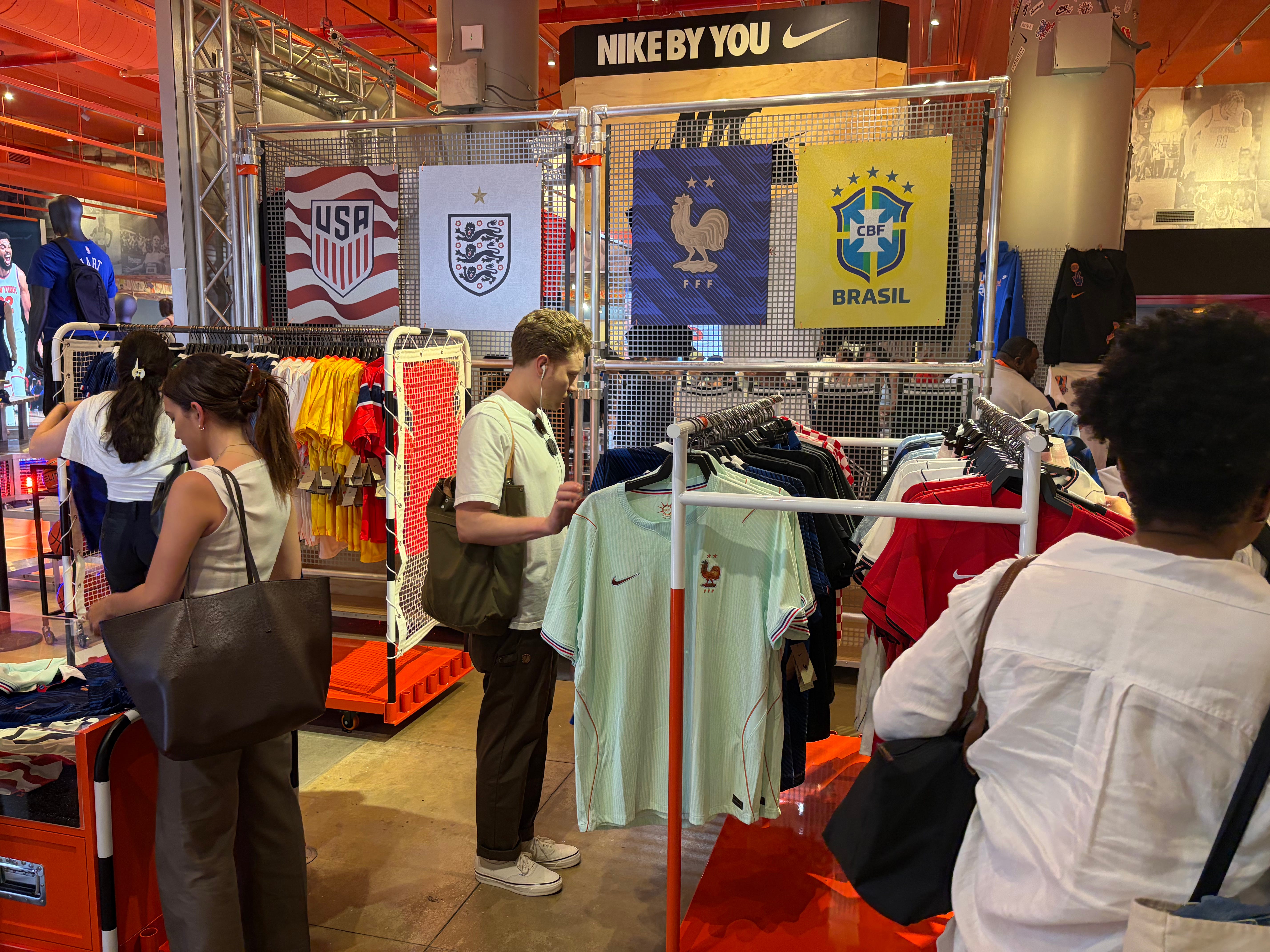
Nike, however, has built its World Cup strategy around star power and cultural relevance. The company is sponsoring 12 national teams, including traditional heavyweights such as Brazil, France, England and co-host United States. It should be noted that the Brazil away jersey was controversial when it was released, upsetting many fans.
Those teams ensure that Nike remains heavily represented in the latter stages of the tournament should the favorites advance as expected. To combat this, Adidas released a retro USMNT denim jersey from the 1994 World Cup (at the time they were the team’s official supplier) that has become very popular in the buildup to this tournament.
In the opening days of the World Cup, Nike launched its headline campaign, “Rip the Script,” a star-studded ad campaign featuring soccer icons and celebrities. The multi-player campaign includes appearances from Cristiano Ronaldo, Kylian Mbappe, Erling Haaland and Vini Jr. It’s nothing new for Nike, who produced similar ads in the ‘90s to much success.
The competition extends well beyond print and digital advertising. Team jerseys will be one of the most lucrative at this World Cup. Industry estimates suggest that 18-23 million replica shirts could be sold globally during the World Cup cycle.
Several of the tournament’s best-selling jerseys are expected to come from Adidas-backed teams such as Argentina and Mexico, while Nike’s collections for Brazil, France and England are also anticipated to perform strongly. Retailers across North America have reported significant demand as fans seek to wear the colors of their national teams.
At the same time, product innovation remains another key front in the rivalry. Nike has promoted new kits featuring performance-focused cooling technologies and design techniques intended to improve player comfort. But the U.S.-based company recently faced scrutiny after some players and fans noticed a visible shoulder-seam issue on certain jerseys, prompting Nike to recommend steaming and washing procedures before use.
Adidas, meanwhile, has emphasized heritage and national identity in its current World Cup collections, drawing inspiration from iconic moments from the past while positioning itself as the sport’s traditional standard-bearer.
Despite their rivalry, both companies dominate the World Cup marketplace. Together with Puma, they supply kits for more than three-quarters of the tournament’s 48 participating nations, reinforcing the concentration of power among a handful of global sportswear brands.
As the tournament progresses, goals, saves and dramatic finishes will be the dominant storylines. But behind every celebration and iconic image, another contest will be underway inside stores and on social media feeds around the world: Nike and Adidas will be competing for which one can dominate at this World Cup.