

Opinion: 3 things we learned from the USMNT roster reveal
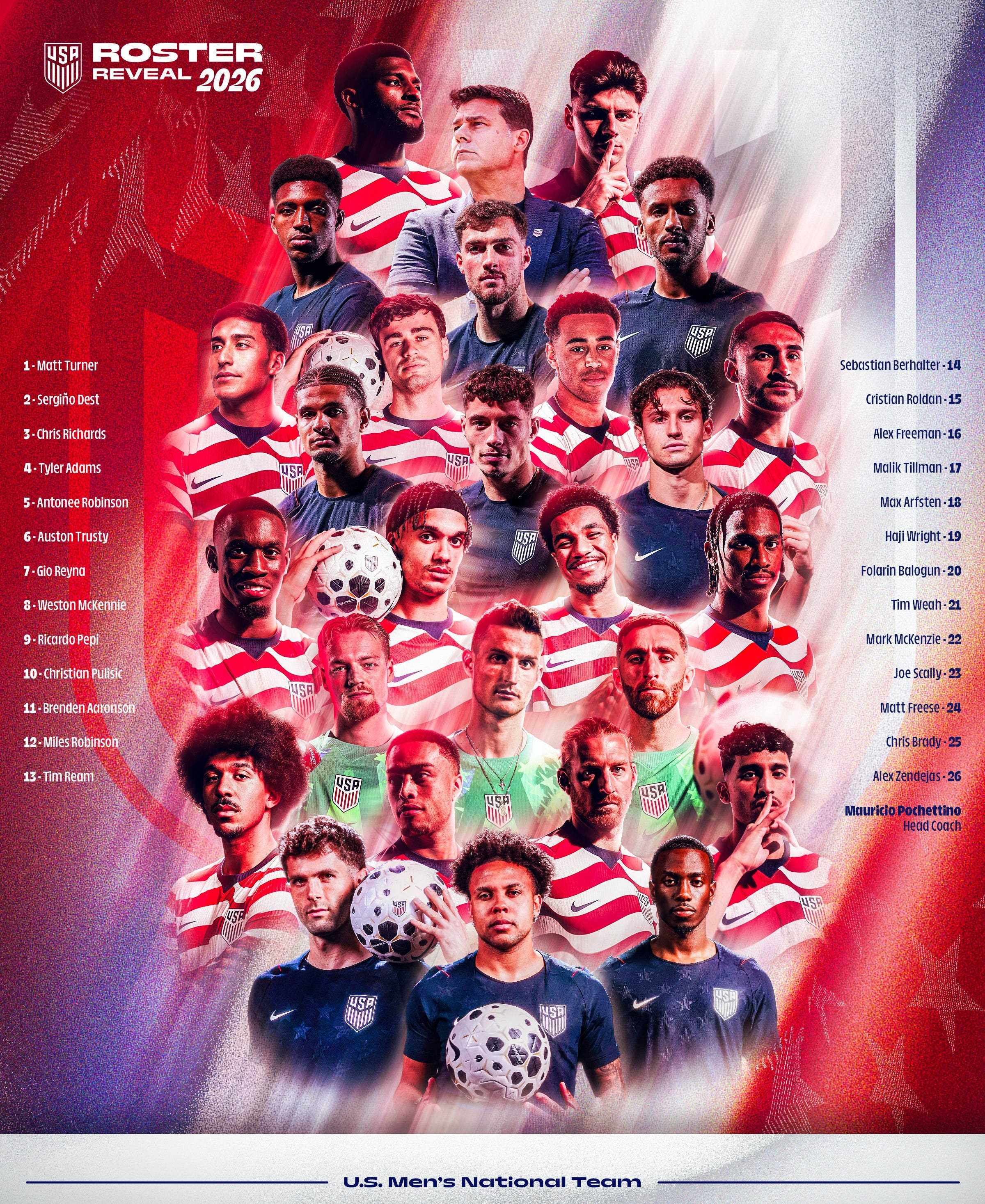
A look at the 26 players who made the World Cup team

The U.S. men’s national team roster rarely arrives without controversy, but this latest one felt especially revealing because of what it said about priorities and depth ahead of a crucial summer.
While most of the core names will take part in the upcoming World Cup, several omissions offered a clearer picture of where the squad stands — and where concerns remain.
Manager Mauricio Pochettino called up 10 defenders, but just four central defenders. The imbalance to his call-ups gives us a glimpse into how Pochettino plans to play at this World Cup, which the Americans kick off on June 12 against Paraguay at SoFi Stadium in Los Angeles.
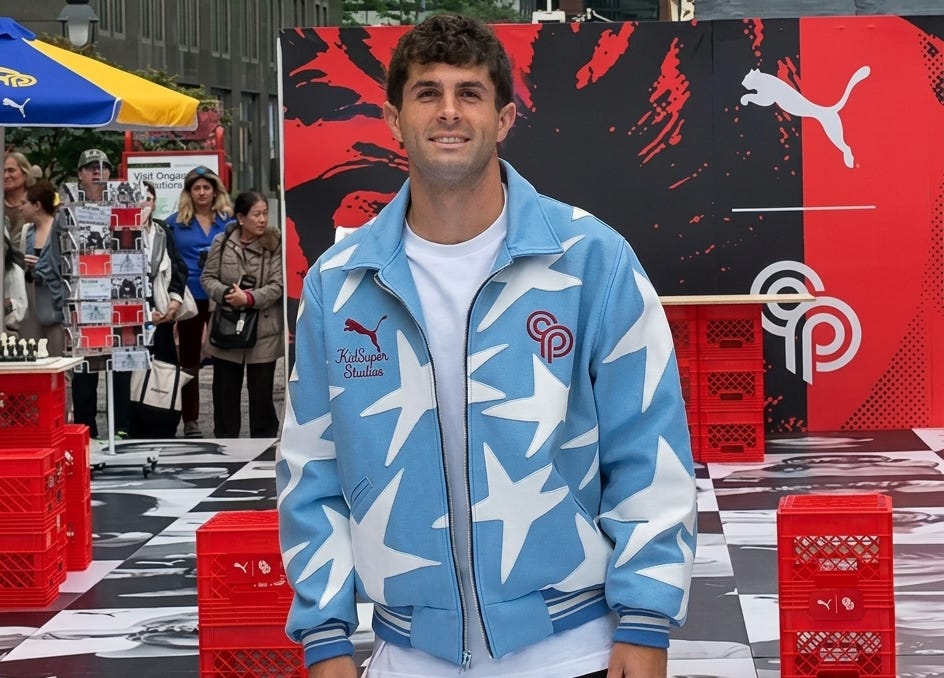
There weren’t any surprises Tuesday at the reveal itself at New York’s Pier 17. The event, televised live on Fox, came four days after The Guardian published the list of 26 players who made the team. Nonetheless, the Fox crew pretended as if the roster had yet been made public.
Reliability over experimentation
The biggest takeaway from the roster is how heavily Pochettino leaned on trusted veterans and established chemistry instead of expanding the player pool. These were safe picks following a year of camps and friendlies. In fact, 13 players were part of the U.S. team at the 2022 World Cup — tying the mark for the highest number of returnees between consecutive World Cups (set between the 1994 and 1998 editions).
With Tyler Adams and Weston McKennie locked in as automatic choices, the remaining spots could have been an opportunity to reward form. Instead, Pochettino stayed conservative with MLS veterans Cristian Roldan and Sebastian Berhalter included while more dynamic options missed out.
The omission of Aidan Morris, for example, stands out in particular. Morris has shown energy, ball-winning ability and consistency for Middlesbrough at club level, making him a logical piece behind Adams. Instead, the roster suggests Pochettino values familiarity and tactical dependability — something he called “flexibility” — at this stage.
That same philosophy appears elsewhere. Veterans like center back Tim Ream and goalkeeper Matt Turner retained their places despite their ages. This feels less like a developmental camp and more like a staff trying to solidify a dependable core before a major tournament.
Midfield depth suddenly looks thin
On paper, the U.S. midfield has long been considered one of the team’s strengths. This 26-man roster, however, has exposed how fragile that depth may actually be with only four central midfielders.
The absences of Tanner Tessmann and Diego Luna leaves the team surprisingly light when it comes to central midfield options. Combined with the injury of Johnny Cardoso, the USMNT suddenly has only four natural central midfielders on the roster.
Pochettino refused to go into any detail regarding the players left off the roster and grew visibly angrier as the news conference wore on.
“I am going to discuss the players who are here,” he told reporters, adding that it was “disrespectful” to talk about players not going to the World Cup.
As for the lack of central midfielders, this creates a potentially dangerous imbalance. If Adams is still managing fitness carefully, or if McKennie is forced into a more advanced role, the squad could lack ball progression and defensive coverage in deeper areas. It also increases the importance of versatile attackers like the polarizing Gio Reyna and Malik Tillman, who may be asked to drift centrally to help compensate creatively.
“Plenty of possibilities,” Pochettino said about the midfield. “What we wanted to provide the team is the opportunity have the best players possible, the right players to make the roster that we believed could make the roster. … I think this roster provides us the possibility to play with a back four, back three, to play with one holding midfielder, to play with no holding midfielders, to play with three more offensive players in front of the back three.”
Nonetheless, Tessmann and Morris each offered physicality and composure in the buildup that this roster now lacks outside of the first-choice starters. If the U.S. is forced to rotate during the tournament (which it likely will), midfield could quickly become the roster’s weakest area rather than its strongest.
Attack-minded tactical identity
While the midfield choices were limited, the forward selections hinted at a more attack-minded approach.
The return of Alejandro Zendejas gives the squad another direct winger capable of isolating defenders and stretching the field. His inclusion, especially after being absent since September, shows that Pochettino wanted additional creativity and one-on-one ability out wide. This choice fits naturally alongside a dangerous attacking core featuring Christian Pulisic, Tim Weah, Folarin Balogun and Ricardo Pepi.
Pulisic will be the starter (despite being on a five-month goal drought with AC Milan), most likely alongside either Zendejas or Weah and Balogun. Reyna, who saw limited playing time this season at Borussia Monchengladbach, could also play in a more advanced position when called upon. Pepi is expected to ride the bench, but come in whenever the offense needs a second-half spark.
These selections imply that the U.S. could play in a 3-2-5 lineup when attacking, but start matches with a 4-3-2-1. Indeed, this roster hints at a team that may try to overwhelm opponents with pace and verticality rather than dominate possession through midfield control. That would explain why Pochettino appears comfortable carrying extra attacking options despite limited central midfield ones.
Pochettino highlighted Zendejas’ abilities, saying the striker “offers a number of possibilities” offensively.
“He can play on the wings or in the midfield pockets,” he added. “He’s a good communicator and has strong relationships with his teammates. He’s a very interesting player tactically.”